

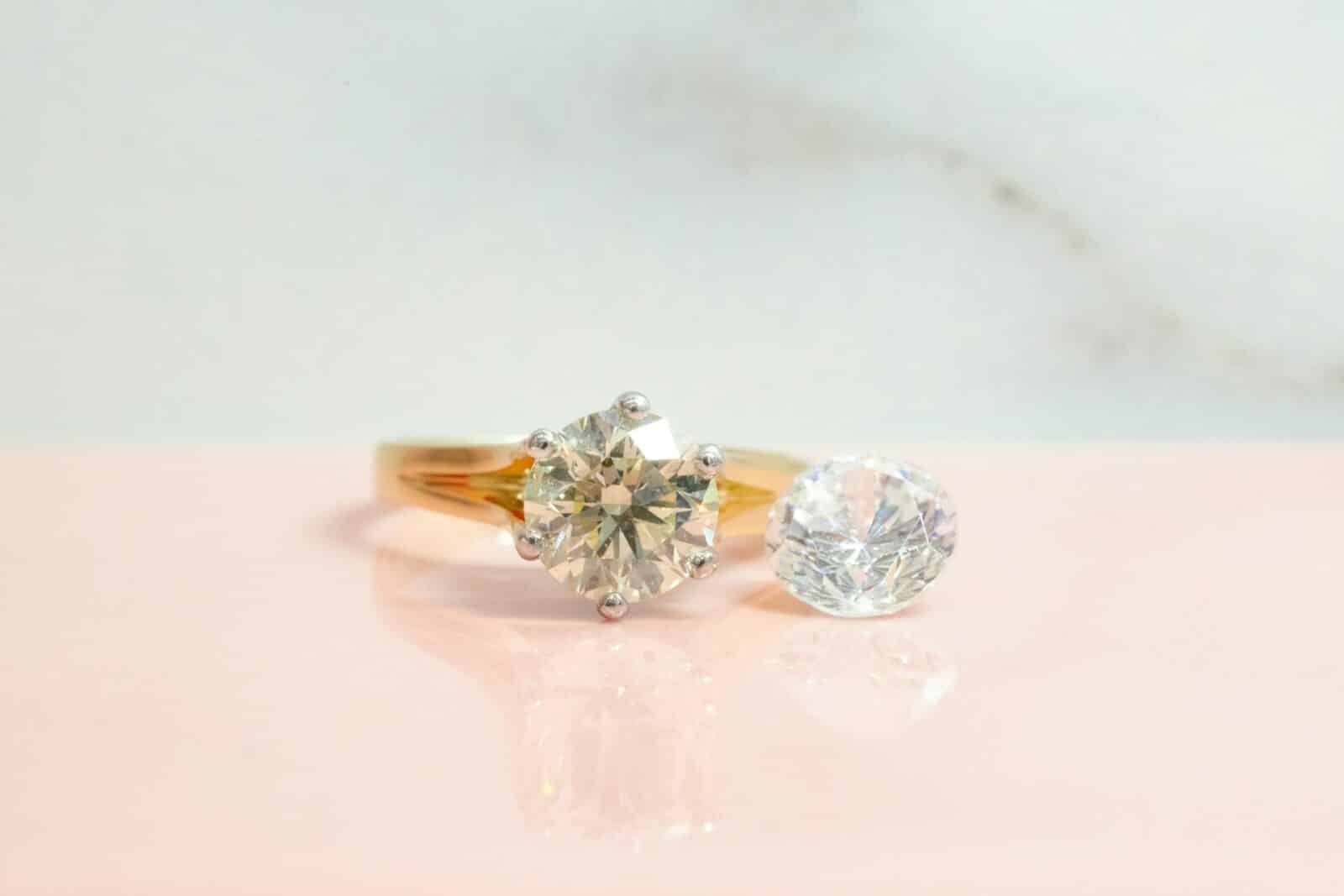
Everyone’s chasing “unique” engagement rings these days. Princess cuts, ovals, cushions – they’re all gorgeous. But here’s what nobody mentions at the jewelry store: when it comes to pure light performance, nothing touches a round brilliant diamond.
There’s a reason 75% of engagement rings feature rounds. It’s not tradition or lack of imagination – it’s physics. Well-cut round diamond rings return up to 98% of light that enters them. Your cushion cut? Maybe 80% on a good day. That’s measurable science.
The 58-Facet Formula Nobody Can Beat
Marcel Tolkowsky calculated the exact angles for maximum light return in 1919. His mathematical formula created 58 precisely positioned facets that work like tiny mirrors. Every single one has a specific job.
The crown facets grab light from above. The pavilion facets bounce it around inside. Then it shoots back through the top in perfect synchronization. The ideal proportions are exact: table 54-57%, crown angle 34-35 degrees, pavilion depth 42.5-43.5%. Even one degree off? Performance drops noticeably.
Modern laser cutting achieves these proportions with incredible precision – tolerances measured in hundredths of millimeters. That accuracy becomes challenging with fancy shapes because their asymmetry creates variables, which is why circle engagement rings remain the obvious choice for brides-to-be, according to Best Brilliance. If sparkle is what you want from your diamond, the round cut is the option for you.
Here’s the thing about fancy shapes – they’re designed with different priorities. Princess cuts have corners that can leak light. Emerald cuts prioritize clarity over brilliance – beautiful, but different. Marquise diamonds often show bow-tie shadows. Ovals have areas where light performance varies.
Fire, Brilliance, and Scintillation
Let’s break down what makes diamonds sparkle:
Brilliance – White light return. Well-cut rounds reflect 93% minimum. Many fancy shapes achieve 75-85%, depending on cut quality.
Fire – Rainbow flashes. Round brilliants split light into colors efficiently because every facet works at optimal angles. Step cuts like emeralds show less fire by design – they emphasize clarity instead.
Scintillation – The disco ball effect when moving. Rounds create uniform light patterns from any angle. Fancy shapes create their own unique patterns – sometimes dramatic, sometimes subtle.
Round brilliants maximize all three simultaneously. Other shapes balance these properties differently. Each has its appeal – rounds just excel at pure light performance.
The Value Nobody Talks About
Here’s something jewelry stores don’t emphasize: round brilliants hold value 10-20% better than fancy shapes. That’s measurable market data.
Why? Universal demand plays a huge role. Consistent grading standards help too. Plus timeless appeal – fashion trends affect fancy shapes more than rounds.
That cushion cut that was everywhere in 2015? Still beautiful, but trends have shifted. The round brilliant your grandmother wore in 1955? Still looks current today. Will in 2055 too.
Best Brilliance stocks more rounds than any other shape. They’re following market demand – people consistently choose rounds when light performance matters most.
The Numbers Tell the Story
The IGI uses ASET scopes to measure actual light return. Here’s what the data shows:
- Round brilliant: 98% with ideal cut
- Princess: 70-75%
- Oval: 65-70%
- Emerald: 60-65%
That’s a significant difference – we’re talking 25-35% variance in light performance. Important note: these numbers assume ideal cuts. A poorly cut round can perform worse than a well-cut princess. Cut quality matters more than shape – but when comparing ideal cuts, rounds consistently lead.
Why Choose Fancy Shapes?
Two factors drive fancy shape cutting: rough diamond yield and personal preference.
Rough diamonds often naturally suggest certain shapes. Cutting a round from elongated rough wastes 60% of the stone. Cutting an oval might only waste 40%. That 20% difference affects pricing significantly.
Some people genuinely prefer the elegant lines of an emerald cut or the romantic heart shape. These aren’t wrong choices – they’re different priorities. Fancy shapes typically cost 20-30% less than rounds. You’re choosing between maximum sparkle and other qualities like size or shape preference.
FAQs
1. Don’t fancy shapes look bigger for the same carat?
Many do. Ovals and marquise diamonds have larger surface areas than rounds of the same weight. You’re getting more visual size, trading some light performance for it.
2. What if I prefer fancy shapes?
Buy what you love. While rounds have superior light performance metrics, jewelry is personal. An emerald cut might speak to you more than any round ever could.
3. Are rounds worth the extra cost?
They typically cost 20-30% more but deliver 25-35% more light performance. They also hold value better. Whether that’s “worth it” depends on your priorities.
4. Can fancy shapes match round performance?
Not in pure light return. The physics of non-circular symmetry prevents it. But some fancy shapes like well-cut radiants come closer than others.
5. What about modified brilliants?
These use brilliant-style faceting on fancy shapes. They perform better than step cuts, typically achieving 70-80% light efficiency. Still can’t match rounds, but they’re bridging the gap.
Rounds deliver unmatched sparkle – that’s physics, not opinion. But choosing a diamond is about more than numbers. Pick what makes you happy.

Active Noon Media is the largest local to national digital media website that represents the voice of the entire nation.