

I think just like every other person, your days also end with chaos, endless notifications, and no time for yourself. And what if I say that I have a simple solution for it, and it’s just a notebook. So it’s your time to get clarity and be creative. If you’re a beginner staring at a blank page, thinking, Where do I even begin? Relax. Here are some journaling ideas for beginners with no fancy tools needed, just a pen, paper, and your thoughts. Ready to journal your way to a brighter you?
Overview of Journal
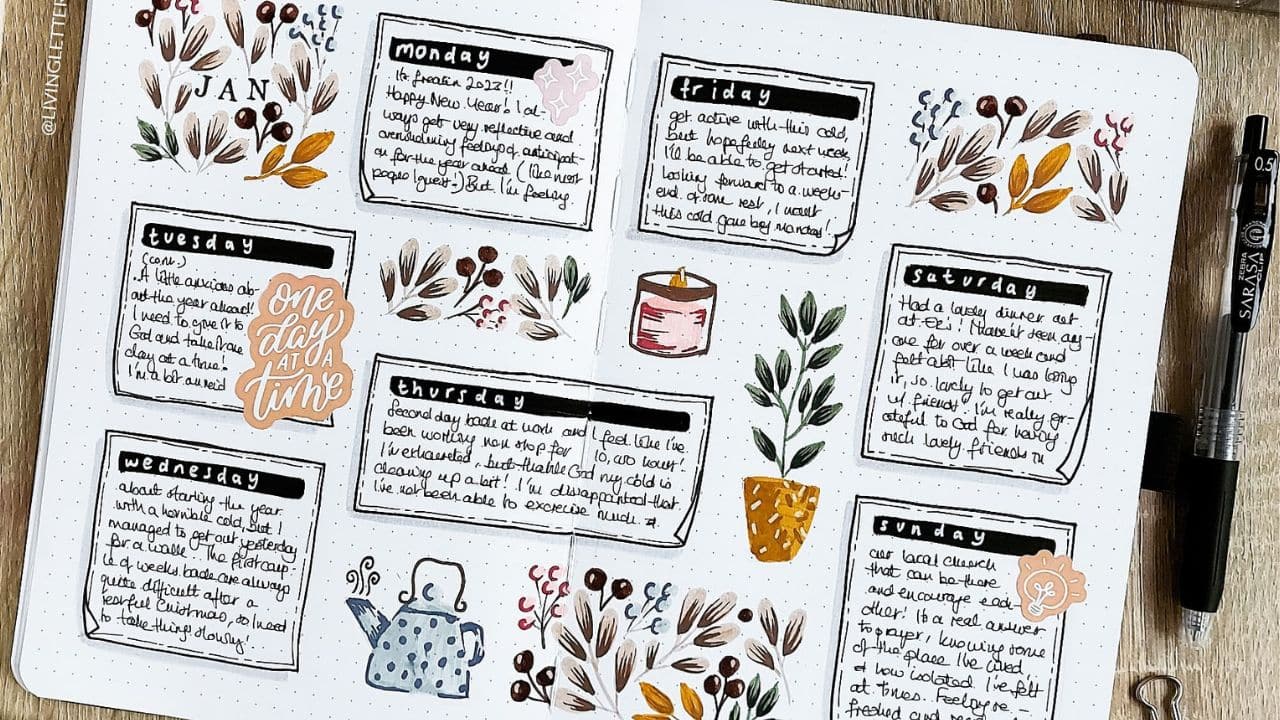
A journal is just a personal notebook in which you put your thoughts, feelings, experiences, and ideas. It is written in your own words and language without thinking about the perfection or grammatical correctness. It may be a place of day-to-day thoughts, gratitude, ambition, and even scribbles or creative notes. The simple idea to start with is simply observing what you did throughout the day, what you are thankful for, or what irritates you. A journal is an effective self-awareness and mindfulness instrument. It can help you make a list of progress, moods, and personal experiences over the course of time.
How Journaling Helps and Changes Your Life?
Writing a journal is not just about writing; it means that you are improving yourself in many ways, some of them are:
- Mental Health Improvement
It reduces stress, anxiety, and symptoms of depression by helping to safely express your thoughts or tough emotions.
- Enhanced Self-Awareness
When you start writing regularly, it helps you uncover your triggers, strengths, weaknesses, and true desires.
- Improved Cognitive Function
Writing strengthens your memory and sharpens your ability to understand and organize information.
- Stress Management
It breaks the loop of repetitive, worrying thoughts and helps you to shift your mind from panic mode to a relaxed state.
- Goal Setting and Productivity
Writing goals clearly makes it easier to track and boost your daily productivity.
- Enhanced Emotional Intelligence
Journaling improves understanding of your reactions and emotions, which leads to better relationships and emotional control.
Simply, journaling makes a big difference in your life since you can find a secure place to know yourself better. When you write regularly, you release stress, anxiety, overthinking, and stress hormones, making you feel better and more stable mentally and emotionally. Journaling enhances self-awareness, which allows you to notice small details about yourself. When you note down what you want and intend to achieve, it becomes achievable and more practical, making you more productive and confident. At last, journaling turns confusion into clarity, chaos into calm, and everyday thoughts into effective personal development.
I have gone through a quote from Dr. Howes, “If you’re feeling stuck, try throwing a bunch of possibilities on the page and sorting through them until you find the best one.”
Different Types Of Journals
There are many types of journals that you can keep. These are different types of journals according to Intelligent Change.
- The Blank Notebook Journal
It is a free space with no lines, sections, or anything. This is good for beginners who want creative freedom to write, doodle, or scribble anything.
- The Dream Journal
It is a notebook used to write your dreams. According to your schedule, you jot down your dreams, whatever you remember, and write them messily or roughly.
- Creative Journal
A creative journal is a sort of notebook that includes elements like doodling, painting, collage, and photography to document thoughts, emotions, and experiences.
- Food Journal
This is all about what you eat for lunch. Or a tasty meal you had during your trip. This is good to know about the type of food you love to have in most of the cases.
- Gratitude Journal
A gratitude journal includes the things or emotions that you are thankful for. This makes you focus on the positive aspects of your life rather than overthinking the negative things.
- Reading Journal
A reading journal is a personalized, often private, notebook or digital log used to track, review, and reflect on books and reading experiences.
- Travel Journal
It includes your trip experience, emotions, and memories, and you can also include photos to make it more memorable.
- Future Vision Journal
Future vision journal is mainly used to define, plan, and visualize personal goals, aspirations, and desired plans, typically over a 1–3 year timeframe.
- Project Journal
A project journal is a record of a project’s progress, including key decisions and milestones. It helps you to organize your thoughts, reduces stress, and helps you stay focused.
- Fitness Journal
It records your physical activity routine and helps you to know how your body feels every other day. Fitness journal also helps you to get more motivated and to achieve your fitness goals.
- Pocket Journal
It is a pocket-friendly notebook for writing journals. It is ideal for capturing fleeting thoughts, to-do lists, quick sketches, and daily reflections.
Some More Types Of Journals
- Personal Junk Journal
- Pregnancy Journal
- Love Journal
- Group Journal
- Letter Journal
- Finance Journal
- Ideas Journal
- What I Wish My Life Were: Pray-Rain Journal
Steps To Start Journaling

These are the simple steps that will help you to start writing, and things to write about in your journal.
- Choose the preferred journaling method.
Select a method that suits you, like a physical notebook or a digital journal.
- Select your style of page.
You can select lined, unlined, or dotted pages based on your preference. Whether you prefer neat writing, free sketching, or a mix of both in your journal.
- Set a routine
Set a daily or weekly routine starting with investing 5-10 minutes. Create a quiet, comfortable space with light music to help you focus.
- Start writing
Before starting your journal, always mention the date and time if you wish to be more specific. Then begin with a short sentence about your mood or day, and just let your thoughts flow in that private space.
- Use prompts if stuck.
When you’re unsure what to write, use prompts like What am I grateful for today?, How am I feeling and why?, What was today’s highlight? Or what challenge did I face and how did I handle it? to spark your writing.
- Review and reflect
Go through your old journal pages to see your progress and growth.
Journaling Ideas for Beginners
There are many ideas for writing journals; you can choose one according to your preferences. This is also a simple answer to things to write about in a journal, for new writers.
1. Simple Emotional Prompts
- Write about how you are feeling.
- Write about any three emotions that you felt during your day.
2. Gratitude and Positivity
- List the things that you are grateful for.
- Write about any one of the happy moments of your day.
3. Daily Reflection
- Write a little summary of your day in a few sentences.
- Think and write about what you have learnt during your day.
4. Goals and Future
- Write about your goals, including short-term and long-term, that is, what you want to do this week, in the coming months, or ahead.
- About any skill you want to learn.
5. Creativity and Fun
- Jot down any favourite memory of your day or anything about childhood.
- Imagine something you want to have and write about it.
6. Relationships and People
- Think and write about someone with whom you feel safe and comfortable.
- Qualities you want in your partner or friends.
7. Health and Habits
- List any healthy habits you want to start in your life.
- How do you feel after doing any exercise or meditation?
Tips For Beginners
These are some tips that will help you to start writing journals.
- Start by writing short sentences or a few points.
- Manage your routine slowly and make it a habit of writing.
- If during the starting days you forget to write, you can leave the pages and then write them whenever you get time. It is good to complete them to have a good sequence.
- Make it interesting by writing with different coloured pens, pictures, and some more creativity. This will make it more interesting for you to write it.
Reviews
Some of the reviews from people on Quora who started writing journals.
- One can see his gradual change in the idea of life. Journal is an excellent tool for self-tracking one’s own metamorphosis.
- For me, it seems like another form of ruminating, the way I do it. It is likely dependent on how you do it. I’ve not tried it, but a gratitude journal might have a different effect than what I envision as journaling.
- It was a nice experience because sometimes you feel like pouring your heart, but again wouldn’t want anyone to know about it, so you write in.
Difference Between A Diary Entry And A Journal
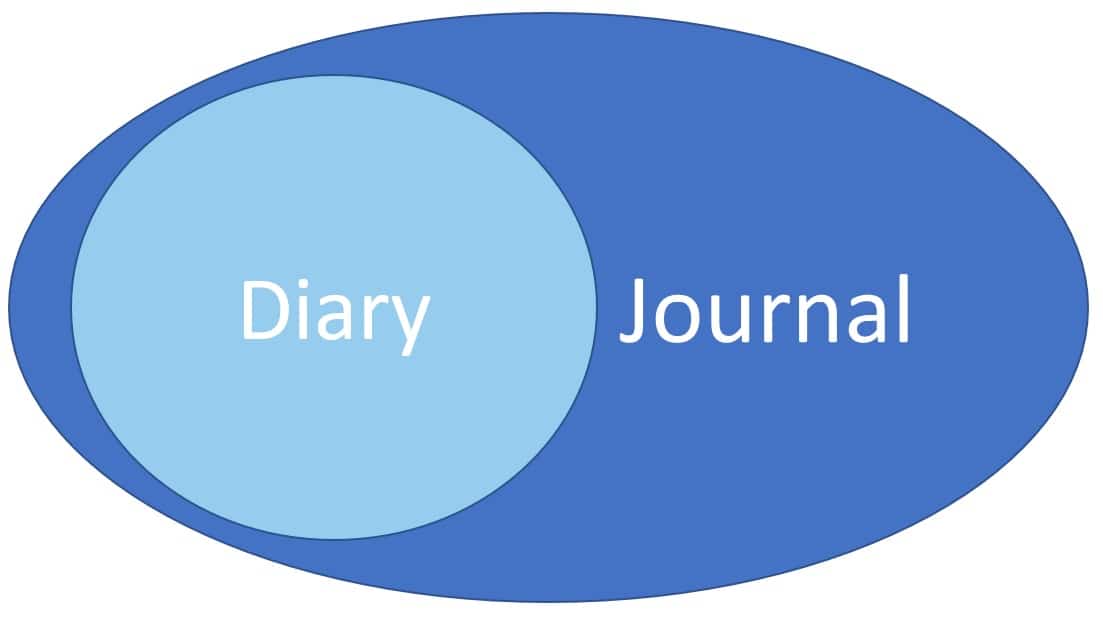
This table overview is necessary because sometimes we get confused between a diary entry and journals. These terms are different and also work differently. After getting information, I have made a table for you so that it will be easy for you to understand.
| Aspect | Diary Entry | Journal |
|---|---|---|
| Definition | It is a short, dated note about your day and what you have experienced during the day. | It is a more personal, reflective note about your thoughts, personal feelings, and what things mean to you. |
| Main Purpose | To record daily events, happenings, and activities of the day. | Record to understand your feelings, emotions, and thoughts. |
| Focus | What happened today? | What does it mean to you? |
| Writing Frequency | Written once a day. | Can write according to your choice, daily, weekly, or whenever you feel like writing. |
| Example (From a student’s POV) | I went to school today and argued with my friend. | Today I felt lonely and sad in school. |
Final Thoughts
Now, after reading the blog, you know how to start journaling in a very simple way. You can choose the type of journal according to your preference and see how you are feeling after writing journal. When you start writing regularly, confusion becomes clarity, and stress gets reduced. So, it’s your time to start writing, release your stress, and make yourself feel happy.
FAQs
1. What are good journaling ideas for beginners?
You can start with your daily highs/ lows, or what made you smile, something like this.
2. Do I need special tools to start journaling?
No, you don’t need any special tool; only a notebook and a pen are required. You can use digital apps according to your preferred choice.
3. How long should I journal each day as a beginner?
At the start, you can start by writing for just 5-10 minutes each day.
4. Is digital journaling as good as paper for beginners?
Yes, of course. As I think paper feels mindful, and apps make searches easy. Choose the option that suits you best.
5. How does journaling reduce stress quickly?
It dumps your worries onto the page. Try easy things to write about in a journal, like rewriting fears positively. Then feel how quickly the stress reduces.
Related: Creative Journaling Techniques: Unleashing Your Inner Artist

Active Noon Media is the largest local to national digital media website that represents the voice of the entire nation.